
Para o conteúdo da página

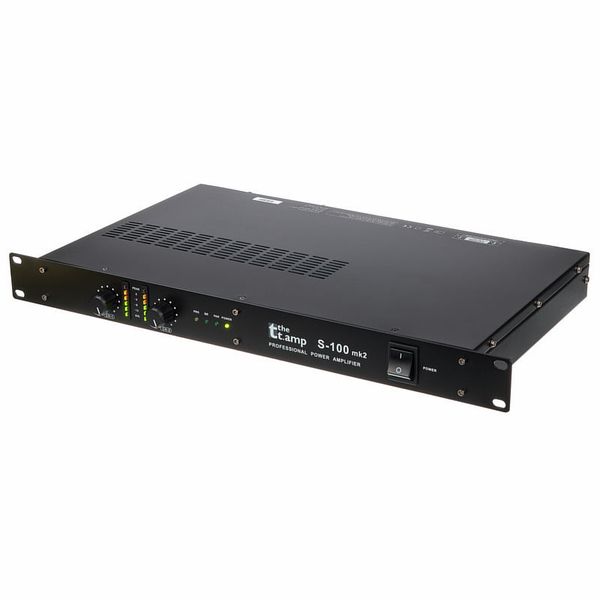
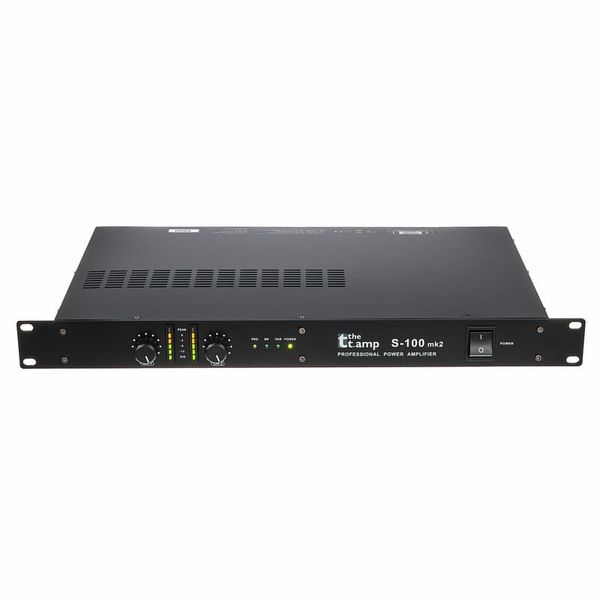
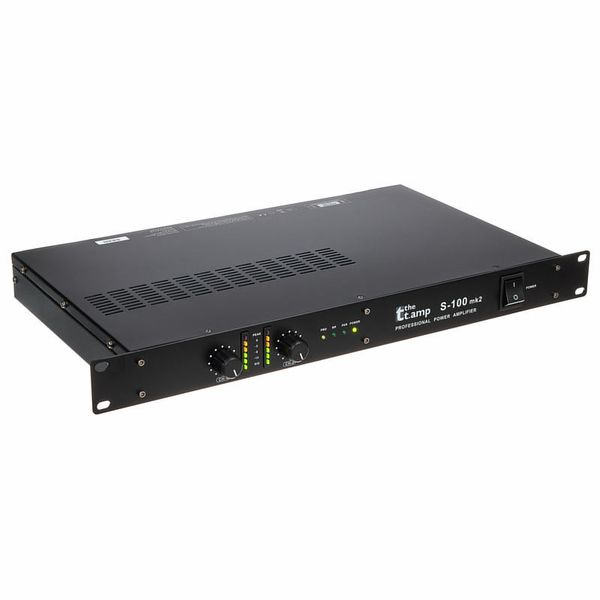
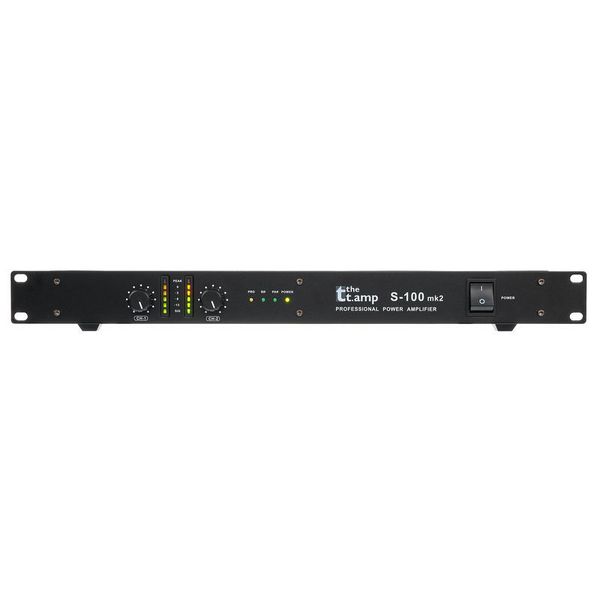
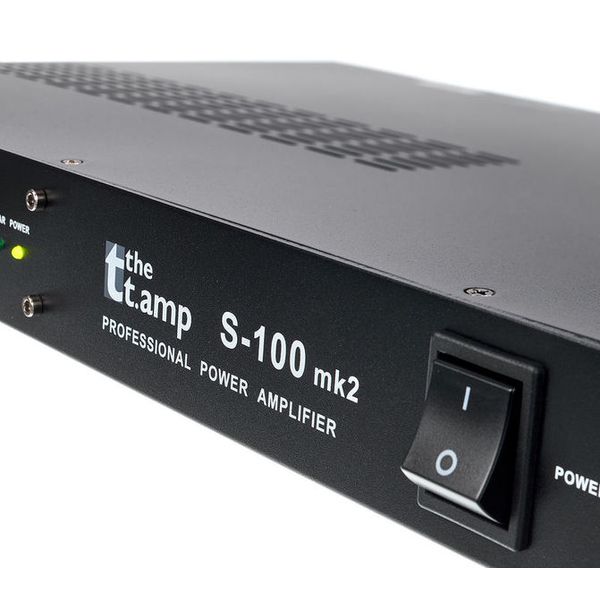
Power Amplifier

  • 2x 100 W at 4 ohms
  • 2x 65 W at 8 ohms
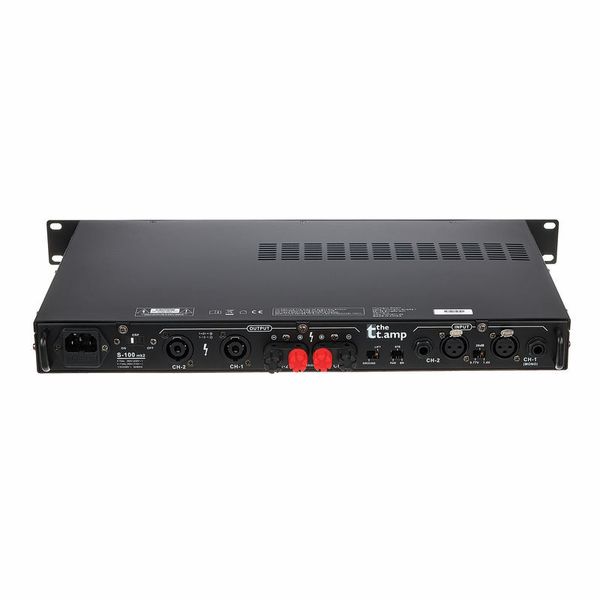
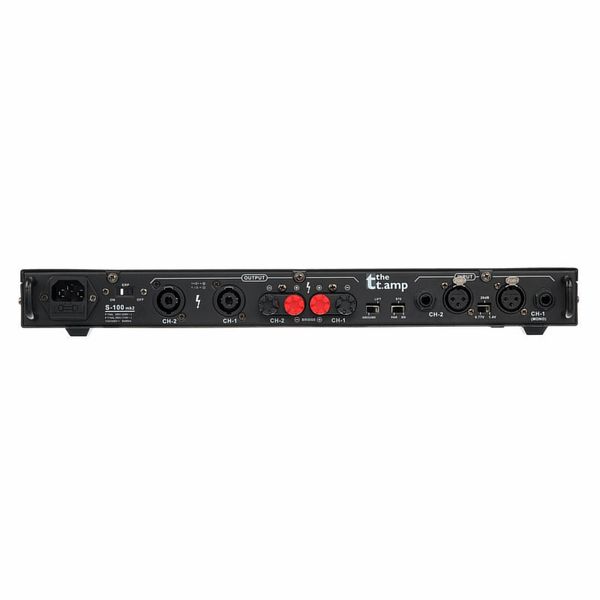
  • Balanced inputs with XLR and jack
  • Bridge mode possible
  • Speaker Twist and binding posts for speaker out
  • All protective circuits including soft-start
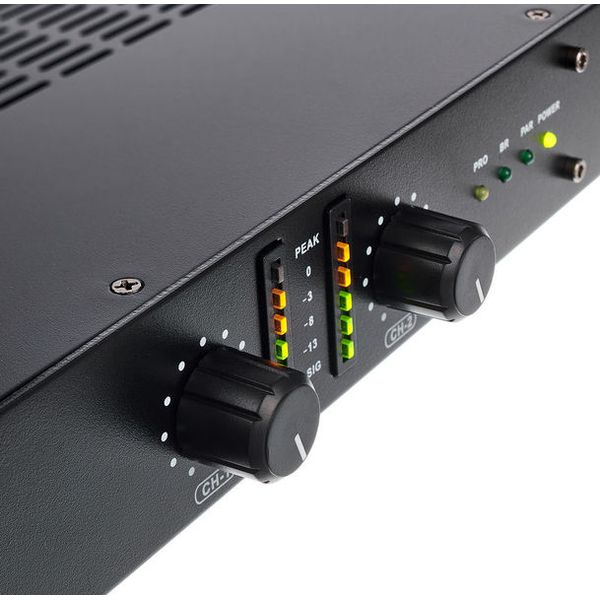
  • Input level switchable from -0 to +4 dB
  • Damping factor > 150
  • Without fan
  • Input sensitivity switchable from 0.775 V (RMS) to 1.4 V RMS, or to 26 dB gain
  • 1 RU, 33 cm deep
  • Slew rate: 35 V/µs
  • Weight: 7.5 kg
  • Disponível desde Outubro 2000
  • número de artigo 144356
  • unidade de venda 1 peça(s)
  • Power (4 Ohms) per Channel 100 W
  • Channels 2
  • Rack Units 1 U
  • Amp Class Class AB
  • 2 Ohm stable No
  • DSP/Crossover No
  • Convection cooling Yes
  • Width 483 mm
  • Depth in mm 330 mm
  • Height 44 mm
  • Weight 7,5 kg
  • Bridged Mode Yes
  • Input XLR Yes
  • Jack Input 6,3 sym. Yes
  • Parallel Input Yes
  • Link Out No
  • Output Speaker Twist Yes
  • Output Binding Post Yes
€ 149
Todos os preços incl. IVA
Em stock
1

403 Avaliações de clientes

4.6 / 5

manuseio

características

som

acabamento

255 Críticas

S
Suntrexplex 04.03.2018
Utilizo em um pequeno estúdio com uma colunas passivas Chario, apenas como comparação e referencia alternativa.
Na realidade o som é limpo, sem ruídos e com uma resposta de qualidade, embora lhe falte um pouco de "corpo" na resposta dos graves. Para o preço está excelente e creio não se poder esperar melhor.
Excelente a capacidade de entrar em standby quando não é utilizado por algum tempo!
Contras: O calor depois de algum tempo ligado, e não necessita de ter um volume alto para que isto aconteça, uso a 1/2 na escala dos potenciómetros, no entanto se estiver em uma posição com aberturas adequadas pode ser combatido e evitar o problema.
manuseio
características
som
acabamento
0
0
Reportar a crítica

Reportar a crítica

A
Anónimo 02.02.2016
Foi comprado com intenção de servir de power amp de monitores em casa, de baixo ao vivo e de PA em festas mas infelizmente só pode ser usado em casa.
Não apresenta problemas com qualidade de som nem com robustes, apesar dos acabamentos terem deixado algumas arestas vivas que já me causaram alguns cortes.
A questão é o aquecimento, ao fim de umas horas em utilização intensiva (ainda que sem clipar) desliga-se por temperatura.
Pelo preço é um produto razoável mas podia ser melhor.
manuseio
características
som
acabamento
0
0
Reportar a crítica

Reportar a crítica

JF
Avaliação
Jorge Ferreira RCM 15.06.2026
Qualidade/preço muito bom.
manuseio
características
som
acabamento
0
0
Reportar a crítica

Reportar a crítica

google translate gb
Infelizmente ocorreu um erro. Por favor tente novamente mais tarde.
S
t.amp s100 mk2
SergheiB 03.11.2019
I purchased a t.amp s100 mk2 for a recording studio as an amplifier for near-field monitors.

Pros: the appearance is pleasant, the amplifier is structurally reliable.
He measured the maximum power (source signal-generator with a resistivity load of 8 ohms) in stereo, parallel and bridge modes. The declared power and operating frequency range is in accordance with the declared manufacturer. I did not observe excitations at high frequencies.

Now the cons:

in the second channel, in the absence of an input signal, an insignificant background of the AC network is heard (in the first channel
this effect is not). You can put up with this.

The power transformer of the amplifier is noticeably buzzing. In this case, the upper cover of the amplifier resonates. In a quiet room it is noticeable.

Now the most unpleasant:
when playing the synthesizer in low register, or on the bassguitar, the sound is distorted and becomes very unpleasant itchy shade. At first I thought that I overloaded the input of the amplifier and I hear clipping. When checking, the input signal level corresponded to -18dB, and the output power did not exceed 4W / 8 Ohm. On load
4 Ohm / 6W effect is even more pronounced. I decided to check if the problem is in the signal of an instrument rich in overtones?
On a purely sinusoidal signal (source - signal generator THD 0.01%). The level of notice ability of spurious modulation is maximum at an input signal frequency of approximately 125 Hz. The effect is observed in both the first and second channels of the amplifier.

In general, the expectations were not met, if I can not solve this problem, I highly not recommend the amplifier.

Now a question for manufacturer technical support: I admit that this effect may be a single copy problem in the glorious t.amp amp family. If so, advise how to fix this problem. Email babii_serghei@mail.ru
manuseio
características
som
acabamento
23
1
Reportar a crítica

Reportar a crítica